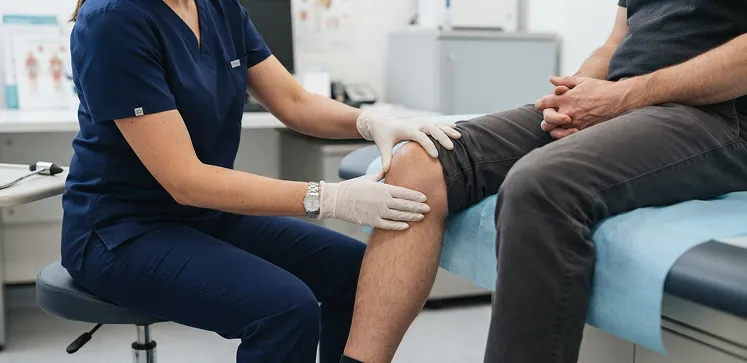

Shockwave Therapy for Knee Pain: A Breakthrough in Treating Knee Osteoarthritis

Shockwave Therapy for Knee Pain: A Breakthrough in Treating Knee Osteoarthritis

Shockwave Therapy for Knee Pain: Effective KOA Treatment in Rhode Island

Are you looking for an effective and non-invasive solution to knee pain? Shockwave Therapy for Knee Pain might be the answer. Knee Osteoarthritis (KOA) affects millions worldwide, leading to joint pain, stiffness, and reduced mobility. Traditional treatments like physical therapy, medications, cortisone injections, and surgery often come with mixed results and potential long-term side effects. However, Extracorporeal Shockwave Therapy (ESWT) is emerging as a safe and effective alternative.

How Does Shockwave Therapy Work for Knee Pain?

Shockwave Therapy uses electrical waves to penetrate damaged tissues, stimulating healing and reducing inflammation. This innovative treatment slows cartilage deterioration while strengthening cartilage and bone structures. Unlike many traditional treatments, ESWT has shown no negative side effects, making it a promising option for long-term pain relief.

Research Backing the Effectiveness of Shockwave for Knee Pain

A study conducted on 30 patients aged 45–60 with severe KOA compared the results of traditional physical therapy versus physical therapy combined with ESWT. The findings were remarkable:

  • Shockwave Therapy Group: Achieved an 81.92% reduction in pain and inflammation.
  • Physical Therapy Only Group: Reported a 48.15% improvement.

The significant improvement in the ESWT group is attributed to the therapy’s ability to promote revascularization.

Benefits of Shockwave Therapy for Knee Osteoarthritis

  • Non-Invasive: No surgery or downtime required.
  • Pain Relief: Effectively reduces pain and inflammation.
  • Cartilage Regeneration: Promotes natural healing of damaged cartilage.
  • No Side Effects: Safe for long-term use.

Why Choose Shockwave Therapy for Knee Pain?

Considering the drawbacks of traditional treatments like medications and surgeries, Shockwave Therapy stands out as a reliable alternative for patients seeking lasting relief from knee pain.

What to Expect During Shockwave Therapy?

The treatment involves a series of sessions where the ESWT instrument delivers targeted electrical waves to the affected knee joint. Each session lasts approximately 15–20 minutes, and most patients notice significant improvements after just a few treatments.

Get Relief Today at the Pain Center of Rhode Island

If you have questions about treatments, prices, and scheduling an evaluation, schedule a call to get your questions and concerns answered.


Sources:

https://www.ncbi.nlm.nih.gov/pmc/articles/PMC11254909/ 

https://www.ncbi.nlm.nih.gov/pmc/articles/PMC11254909/pdf/41598_2024_Article_67511.pd
Schedule a 15-Minute Discovery Call

Learn more, discuss your specific needs, and get priority access to our scheduling.

Blog

More Articles

Explore additional articles on regenerative treatments and pain management.

Regenerative Medicine

[reading_time]

What is Regenerative Medicine | The Pain Center of Rhode Island

Regenerative medicine is a field of medicine that focuses on repairing and regenerating damaged tissues using the body’s own cells. This drug-free and non-surgical approach makes it an ideal treatment for many patients who are looking for alternatives to traditional treatments. It can help patients avoid surgery and the need for constant medications. 

Regenexx is one of the main providers in this field, known for its advanced treatments such as image-guided stem cells for regenerative medicine, PRP, and Prolotherapy. They’re treatments aim to restore normal function back to damaged tissues, instead of just managing your symptoms. This is helping thousands of people with chronic pain who want a non-surgical solution to get back to their normal lives. In addition to Regenexx, there are other regenerative medicine solutions such as EMTT, Laser Therapy, and Shockwave Therapy. Depending on your level of pain and the recovery period you are looking for, there is a regenerative medicine treatment that is right for you.

If you would like to speak with our team and get your questions answered, feel free to schedule a call using this Meeting Link

Which Regenerative Medicine Treatment is Right for Me?

Choosing the right advanced regenerative medicine treatment starts with understanding your specific condition and which options are best suited for your lifestyle. To find out what treatment is best for your pain, you should consult a medical professional before deciding on a treatment plan. Whether you are dealing with joint pain, arthritis, a sports injury, or a lingering pain, there is a non-invasive option for you. Below are types of regenerative medicine:

Regenexx Treatments

Regenexx offers a range of treatments that are tailored to your individual needs.  Their goal is to harness the body’s own healing power by using image-guided stem cell and platelet procedures to relieve pain without surgery. 

Prolotherapy: Best for patients who are looking for an all-natural treatment, are experiencing mild pain, and can come back for multiple sessions. Prolotherapy is the injection of Dextrose, a sugar solution, which alerts the cells in the affected area to start getting rid of the dextrose, which kickstarts your immune system to start healing the area.

Bone Marrow Concentrate: This is ideal for patients who are experiencing severe chronic pain, have tried many options before with no success, or are looking to avoid surgery. This works because stem cells can turn into any other kind of cell, therefore, they will transform into cells that your body needs to heal. For example, it can heal muscle tears and regenerate damaged cartilage. 

PRP (Platelet Rich Plasma): This procedure is suited for patients who are experiencing mild to severe pain. This treatment is done by extracting your blood, spinning it in the lab where the technician separates and concentrates the platelets, and then injecting them into the affected area. This works because platelets are the part of your blood that works to heal you; therefore, by injecting them into the affected area, it works to heal the damaged cells that are causing the discomfort. While PRP is highly effective on its own, it can give even better results when combined with other treatments as well. When combined with Shockwave Therapy, EMTT, or Laser Therapy, it can boost circulation and accelerate the healing process. Doing physical therapy as well is very helpful in order to get your full, normal mobility back. Many athletes looking for regenerative sports medicine options turn to PRP since it will allow them to recover from an injury quickly and safely. 

Non-Invasive Regenerative Medicine Treatments

Shockwave Therapy: Best for patients who are looking to avoid injections, who have mild to severe pain, and who don’t mind coming in for multiple sessions. Shockwave Therapy works by emitting acoustic pressure waves to the damaged tissue, causing the injured cells to essentially “wake up”. These waves create micro-traumas that stimulate blood flow, increase oxygen levels in cells, and relax tissues. This process triggers the body’s natural healing process, promoting cell regeneration. 

EMTT (Electro Magnetic Transduction Therapy): Best for patients who don’t like injections, who are comfortable coming back for multiple sessions, and who are experiencing mild to moderate pain. Unlike Shockwave Therapy, EMTT machines emit very high magnetic pulses, and don’t have to come in direct contact with the patient. This treatment is especially beneficial for older patients since they will usually feel nothing or only a slight pulling sensation. The process works the same as Shockwave Therapy as it stimulates your cells in the targeted area, to promote the body’s natural healing process. 

Conditions Commonly Treated with Regenerative Medicine:

  • Knee and hip arthritis
  • Rotator cuff tears
  • Tendon injuries
  • Lower back pain
  • ACL and sports-related injuries
  • Overuse Conditions

How much does it cost?

Prices for regenerative medicine range a lot depending on your provider, the number of treatment sessions you get, and how many areas you would like to treat. The average cost of a regenerative medicine treatment is typically between $2000 to $2500. Some clinics may offer packages. For example, at the Pain Center of Rhode Island, we offer a package that includes Prolotherapy, Stem Cells, and PRP. This cost ranges from $5,000-$7,000. We also offer a non-invasive package that includes radial shockwave, focal shockwave, and EMTT for $1,500-2,500

For more information on pricing and packages, feel free to schedule a meeting with our staff. 

Regenerative Medicine for Sports

Regenerative medicine offers many treatments for sport-related injuries by helping the body repair and regenerate damaged tissues more effectively. Many athletes encounter common injuries to their shoulders, elbows, knees, ankles, back, etc, but don’t want to go through surgery to heal. At The Pain Center of RI, we ensure recovery without surgery, regaining your optimal function, and preventing recurrence with targeted rehabilitation plans. 

Visit our Conditions page to find the area of your body where you’re experiencing pain and explore detailed information about it.”

Why Choose the Pain Center of RI?

If you’re living with chronic pain, joint discomfort, or sports injuries, finding an effective and non-invasive solution can be a struggle. At The Pain Center of Rhode Island, we offer an advanced approach to pain management that heals the root of the problem rather than just managing your symptoms. 

We are a proud partner of Regenexx, a nationally recognized regenerative medicine research center that provides us with the equipment needed to successfully perform Stem Cell, PRP, and prolotherapy procedures. 

We also offer non-invasive regenerative medicine treatments such as EMTT, Shockwave Therapy, and Laser therapy. Whether you are dealing with chronic pain, joint discomfort, or arthritis, there is a treatment for you that is designed to help your body actually recover. 

The clinic is led by  Dr. Blanki Cherubini, who is Board Certified in Physical Medicine and Rehabilitation and has extensive training in regenerative treatments. Dr. Cherubini takes time to listen, ask questions, and get to the root of your pain.

“This place, these procedures, these people, have given me my life back” – Kerri Cooper, Regenerative Medicine Patient 

Watch Kerri Cooper’s inspirational story and other patient videos on our Testimonials Page

Common Patient FAQ’s

  • How much does it cost?
      • Pricing depends on how many treatments you get, how many body parts, or how much blood or bone marrow we need to draw, which is all based on what the doctor recommends. On average, patients will pay between 1,500 and 2,500 for their full treatment. 
  • Can I pay per treatment, or do I have to pay all upfront? 
      • We typically don’t allow patients to pay per treatment because, in order to see the best results, we encourage our patients to complete the full treatment plan outlined by the doctor. However, you can always work out a pricing plan with our technician when you come in for your evaluation. 
  • Is the evaluation FREE?
    • The evaluation is covered by insurance, but you may still have a copay or deductible (based on your insurance plan)
  • What happens at the first appointment?
    • At your first appointment, Dr Cherubini will do a comprehensive evaluation to get a full understanding of your pain. We recommend you bring your most recent X-ray or MRI; this way, Dr Cherubini can get the best look at what treatment is right for you. From there, she recommends a personalized treatment plan based on your goals and needs.
  • How long does it take to feel the effects? 
      • It depends on the treatments; some patients feel relief after 1 session of shockwave, but on average, for all our regenerative medicine treatments, it will take about 6 – 12 weeks to feel the full effects. This is because your body is going through the process of regenerating your cells, which takes some time. 
  • What are some common conditions you treat?
      • We treat a wide range of conditions, which include arthritis, plantar fasciitis, sports injuries, chronic pain, joint pain, etc.
  • Do we take HSA or FSA?
    • Yes, we take HSA and FSA to pay for our treatments

Start your journey to feeling better today. 

Schedule a quick call with our team to get your questions answered and explore treatment options tailored to you. We’ll walk you through pricing, packages, and what to expect, and you’ll get priority access to our doctor’s schedule so we can start helping you as soon as possible.

PRP

What is PRP? | Pain Center of Rhode Island

Platelet-Rich Plasma (PRP) is a minimally invasive treatment that harnesses your body’s natural healing ability to accelerate recovery, reduce pain, enhance function, and repair damaged tissue. The process involves drawing a sample of your blood, then using our in-house laboratory to separate the platelet-rich plasma from the other blood components.

We proudly partner with Regenexx—the leader in PRP research and innovation. Through their proprietary technology, we’re able to offer some of the highest-quality PRP treatments available today.

If you would like to speak with our team and get your questions answered, feel free to schedule a call using this Meeting Link


What is Plasma?

Plasma plays a vital role in your body’s healing process. It is the part of your blood that rushes to repair tissue after an injury. When you scrape your knee, it’s the plasma that gets to work restoring the damaged skin cells. That same healing mechanism is now being used to target deeper orthopedic injuries.

By isolating this powerful component and injecting it directly into areas causing pain, we allow your body to heal itself naturally and effectively.

Many common orthopedic issues that typically require surgery or long-term medication management can now be treated using your body’s own plasma.


Is PRP right for you?

PRP may be an ideal solution if you’re looking to recover faster from an injury, optimize your physical performance, or manage a chronic condition—without the risks and downtime of surgery.

Because it’s a minimally invasive treatment, PRP offers significantly shorter recovery times compared to traditional surgical options. Our patients are able to return to their normal activities sooner and with less disruption to their lives.


Common Conditions Treated With PRP Therapy

Extensive research shows PRP is effective for a wide range of orthopedic and musculoskeletal conditions. Below are some of the most common diagnoses we treat using PRP:

Knee Arthritis

Many of our patients suffer from knee arthritis that severely limits their mobility. Kerri Cooper was one such patient, struggling with debilitating pain. After undergoing PRP treatment, she reported feeling more than 90% improvement in her symptoms.

Watch Kerri Cooper’s Inspiring Story

Hip Arthritis

Hip replacement is often recommended to people over 60 with severe arthritis. One of our patients, Marlene Groves, was told she would eventually need a hip replacement. Instead of waiting in pain, she chose PRP treatment at the Pain Center of Rhode Island. She now reports a 90% improvement in her symptoms.

Watch Marlene Groves Inspiring Story 

Lower Back Pain: 

In a comprehensive  Systematic Review of Platelet-Rich Plasma for Low Back Pain, researchers analyzed hundreds of studies evaluating PRP’s effectiveness in treating lumbar conditions and degenerative disc disease. The results were consistent: PRP significantly reduces back pain, improves mobility, and enhances quality of life, with no clinically significant side effects.

Shoulder Pain (Rotator Cuff Tears):

New research is shedding light on PRP’s effectiveness compared to traditional treatments like physical therapy and surgery. In a recent study on PRP for Rotator Cuff Injuries, researchers concluded that PRP therapy is promising for treating rotator cuff injuries, offering potential benefits in accelerating healing, reducing pain, and improving functional outcomes. This makes PRP a strong alternative or complement to conventional therapies.

ACL Tears: 

ACL tears affect over 100,000 people annually. Unfortunately, many patients who undergo surgery never regain full function, as the reconstructed ACL lacks the integrity of the original. PRP offers a compelling option by supporting your body’s natural healing processes to repair the original ligament tissue when possible.

In this article, you will find out more about the effectiveness of PRP.


PRP for Sports 

PRP is widely used among athletes who want to recover from injuries without undergoing surgery. It is especially effective for tendon injuries (like tennis elbow, jumper’s knee, and Achilles tendinitis) and ligament tears (like ACL or rotator cuff).

Unlike cortisone injections that only mask pain, PRP encourages true regeneration and healing at the cellular level.

We work with many athletes seeking to restore peak performance or recover after injury. If you’re interested in learning more, schedule a call with our PRP team. 


How much does PRP cost?

PRP can be costly because of the advanced machinery, lab processing, and the time required for our doctor and her staff to complete the treatment. As well, PRP costs can range dramatically based on your area of pain, the level of pain you are experiencing, the amount of blood that we have to extract, and the number of injections you need. 

On the low end, patients can expect to pay around $1,500, but prices can go above $5,000.  We understand this is a large investment for people to make in the health of their bodies. Which is why we offer payment plans through Care Credit and will try our best to schedule your treatments in a way where you incur the lowest amount of lab fees. 


What are the risks or side effects?

PRP is considered extremely safe because it uses your own plasma. However, as with any injection-based procedure, there are potential risks, including:

  • Mild pain or discomfort at the injection site
  • Infection
  • Nerve injury
  • Tissue irritation or damage

At the Pain Center of Rhode Island, we follow rigorous safety protocols to ensure each treatment is delivered with the highest standard of care.


Why choose us 

At the Pain Center of Rhode Island, we are proud to be on the cutting edge of regenerative medicine. We constantly seek ways to improve patient outcomes and refine our techniques.

We are honored by the hundreds of 5-star reviews we’ve received and the patients who have shared their journeys through testimonial videos.

Our close partnership with Regenexx is at the heart of what we do. Regenexx supplies our lab systems and trains our staff in best practices. They were the first in the world to use bone marrow concentrate stem cells for orthopedic treatment and have led the charge in PRP innovation ever since.

Their comprehensive patient registry and decades of data offer real-world evidence of the long-term success of PRP and regenerative therapies.


Combining PRP with other treatments 

PRP is highly effective on its own, but when combined with other advanced therapies, it can offer even greater results.

We take a comprehensive, multimodal approach to pain management. PRP is often paired with:


 Discover the benefits of Platelet-Rich Plasma therapy (PRP) at the Pain Center of Rhode Island. Our expert team can provide detailed insights into the efficacy of PRP for various medical conditions. If you’re considering PRP or want to learn more about how it could help your specific condition, we invite you to schedule a consultation with our team. If you’re considering PRP or want to learn more about how it could help your specific condition, we invite you to schedule a consultation with our team.

Let’s explore the power of your body’s natural healing—together.


5 Physical Therapy Exercises for Lower Back Pain | Pain Center Of Rhode Island

Low back pain ​(LBP) is a prevalent condition affecting a significant portion of the global population. In 2021, it was estimated that over 551 million people were affected by low back pain, making it the highest contributor to disability worldwide. 

At the Pain Center of Rhode Island (PCRI), we combine expert physical therapy exercises for lower back pain with cutting-edge treatments in PRP, sports medicine, and shockwave therapy. Our comprehensive physical therapy is led by our experienced specialist, Sheila Maguire. She provides personalized care to help patients achieve lasting relief and improved function. 

What Is Physical Therapy?

Physical therapy (PT) is a healthcare specialty focused on restoring movement, improving function, and relieving pain. It uses targeted exercises such as core stability, flexibility, strength training, manual therapy, and education to address various conditions. 

At PCRI, physical therapy is an integral part of our multidisciplinary approach to care, working in harmony with treatments like PRP and Shockwave Therapy to optimize recovery.

Who Needs Physical Therapy?

Physical therapy is beneficial for people experiencing:

  • Acute or chronic pain in areas like the back, neck, or joints.
  • Sports injuries such as sprains, strains, or tendonitis.
  • Post-surgical recovery, including spinal surgery or joint replacements.
  • Repetitive strain injuries, such as lifting, twisting, reaching, and bending 
  • Conditions such as:
    • Sciatica 
    • Arthritis
    • degenerative disc disease
    • Scoliosis
    • EDS
    • Lyme disease
    • Autoimmune disease 
  • Movement impairments are caused by: 
    • poor posture
    • Injury
    • muscle imbalances
    • neurological disorders
    • Lower body injuries
  • Accidents and work injuries

Whether you’re an adult or child athlete recovering from an injury, a child with a musculoskeletal disease, an active adult managing chronic pain, or a patient seeking to complement regenerative therapies, physical therapy is a cornerstone of recovery.

How to Prepare for Physical Therapy

Preparing for physical therapy is simple but essential for a smooth experience:

  1. Have a referral from your doctor. If you haven’t yet seen a doctor, make an appointment with us.
  2. Know Your Goals: Common Goals:
    1. reducing pain
    2. regaining strength
    3. returning to daily activities
    4. Returning to sports or work
    5. reducing fall risks
    6. regaining balance
    7. Improving your walking pattern
  3. Bring Medical Information: Share relevant medical history
    1. Imaging
    2. Previous treatment notes with your previous physical therapist
    3. List of medications
  4. Stay Hydrated: Hydration helps with muscle recovery and performance during exercises.
  5. Ask Questions: Feel free to ask about your treatment plan or express concerns during your visit.

What Should I Wear to Physical Therapy?

Comfortable, loose-fitting clothing is ideal for physical therapy. Depending on the area being treated, consider:

  • Athletic shorts or leggings for lower body therapy.
  • A tank top or loose T-shirt for upper body work.
  • Wear supportive, closed-toe shoes like sneakers.

Your therapist may need to access specific areas related to your injury, so wear something that allows easy movement and flexibility.

Our Comprehensive Approach to Physical Therapy

In-House Physical Therapy Services

At PCRI, we’re proud to offer in-house physical therapy to complement our regenerative medicine, sports medicine, and shockwave therapy treatments. By integrating these services, we ensure seamless communication among our care team and a unified approach to recovery.

Meet Sheila Maguire

Our lead physical therapist, Sheila Maguire, brings years of expertise and dedication to patient care. She will help you break the cycle of pain. Sheila specializes in treating back pain, sports injuries, and chronic conditions with evidence-based techniques tailored to each patient. Her holistic approach ensures that your physical therapy program is both effective and empowering.

Sheila is particularly skilled in combining manual therapy, therapeutic exercises, and patient education to achieve optimal results. Her experience working with patients of all ages and activity levels makes her a trusted partner in recovery, whether you’re a weekend warrior or a professional athlete.

Examples of Individualized Treatment Plans and Exercises for Lower Back Pain

At PCRI, every treatment plan is customized to fit your needs. Examples include:

  • Chronic Spinal Conditions: 
    • For someone with Chronic Spinal Conditions, we might start them on heat and an electrical stimulation unit, then we would apply soft tissue massaging and cupping, followed by strength and flexibility training exercises (view examples below)
  • Sports Medicine-Focused Therapy
    • Similar to chronic spinal conditions we would begin with heat therapies, massages, and cupping, we would then combine passive stretching with strength training, balance exercises, and mobility drills. Lastly, we make use of tape for stability and work to improve the specific motions for your sport by simulating your sports activity. This treatment plan is designed to help athletes recover quickly and prevent re-injury.
  • Regenerative Therapy / Post-Surgical Back Pain Care
    • This treatment plan would follow protocols and post-treatment recommendations by the doctor who is referring you to therapy. Therapies that complement PRP (Platelet-Rich Plasma) or surgeries are designed to improve strength and mobility while minimizing discomfort. 

*To achieve optimal healing after PRP or Surgery, Sheila is here to guide you through the doctor’s personalized treatment protocol. Sheila will also follow up through phone calls and emails as needed to help you with your recovery process*

Examples of Common Physical Therapy Exercises for Lower Back Pain

During physical therapy, we guide patients through targeted exercises, including:

  • Common for beginners: 
  • Basic: Pelvic tilt, piriformis stretch, bridging, calf stretch, hamstring stretch
  • Pilates and yoga: Sheila is trained in modifying pilates and yoga exercises to help heal back. Examples include Cat Cow Stretch and Childs Pose.
    • Connective Tissue workouts: Reaching your end range of motion, ball rolls, foot stretching, single leg standing. Watch this video to learn more.
    • Core Stabilization: To strengthen the muscles supporting your spine.
  • Mid-level:
    • Seated stationary bike exercises
    • Yoga Ball Exercises
    • Light Weight exercises
  • Advanced for heavier lifting: 
    • Tonal Machine
    • Quadruped Arm/Leg Raises (Bird Dog) To improve balance and spinal stability.
    • Planks 
  • McKenzie Extension Exercises: To alleviate herniated disc symptoms

These exercises are simple, effective, and evolve as your condition improves.

Best Tips from Sheila Maguire

Sheila shares her top advice for managing back pain and maximizing physical therapy benefits:

  1. Lifestyle modifications: 
    1. Sheila is trained to advise you on how to modify your work, life, sports, and daily activities to do them appropriately. Examples include designing your workstation to reduce your specific pains. She may recommend standing decks, seat cushions, wrist supports, etc…
  2. Stay Consistent: Slow and steady commitment produces the best results. Regular attendance and at-home practice are crucial for success. Don’t expect overnight 
  3. Your toolbox: Keep these items at home to be ready for anything life throws at you:
    1. Biofreeze
    2. Hotpack
    3. massage gun
    4. yoga mat
    5. Support pillows
    6. Yoga Strap 
  4. Manage your stress at home: We can help you take control of youre pain so that you can take control of your life
  5. Focus on Posture: Small adjustments can make a big difference in reducing strain.
  6. Listen to Your Body: Explore your limit. Your body is capable of much more than you might think. Strength is often the key to reducing pain, but don’t forget to stop if you feel sharp or unusual pain.
  7. Hydrate and Rest: Recovery isn’t just about exercise; it’s about supporting your body holistically. Prioritize your sleep! Your body heals while you’re sleeping 

Best At-Home Physical Therapy Exercises for Lower Back Pain to Try

To support your recovery, incorporate these at-home exercises (as approved by your therapist): 

HAMSTRING STRETCH

  • While lying on your back, raise your leg and hold the back of your knee. Pull the leg upwards until you feel a stretch. Hold, relax, and repeat.

Bridging

  • Lie down on your back with your knees bent and your feet flat on the ground. Roll up into a bridge, buttock first, as pictured. Then, slowly lower back down, one vertebrae at a time, buttock hits the ground last.

DOUBLE LEG HEEL RAISES WITH SUPPORT – CALF RAISES

  • While standing next to a chair or countertop for support, raise your toes as you lift your heels off the ground. Return your heels to the floor and repeat. 

Testimonials from Our Patients

We’re proud of the results our patients achieve and invite you to explore their success stories. Check out our Goole Reviews Page and search for Sheila to see how our in-house physical therapy has improved lives.

Come in for an Evaluation

If you’re experiencing back pain or looking for a physical therapy program tailored to your needs, the Pain Center of Rhode Island is here to help. From sports injuries to chronic conditions, we offer expert care designed to complement our advanced medical treatments.

Schedule an evaluation today and take the first step toward lasting relief and recovery. Together, we’ll create a plan to help you move better, feel stronger, and live pain-free.

Contact us now to learn more or book your appointment!