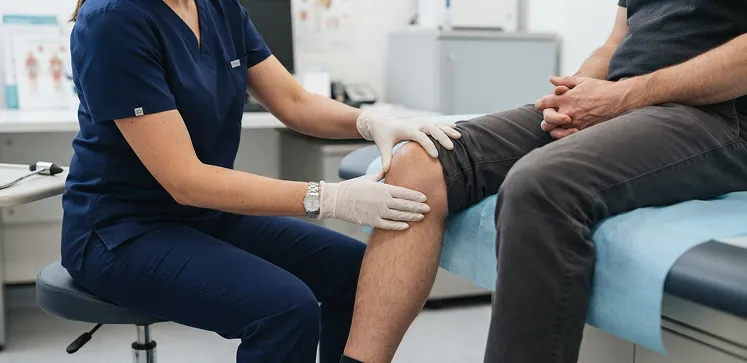


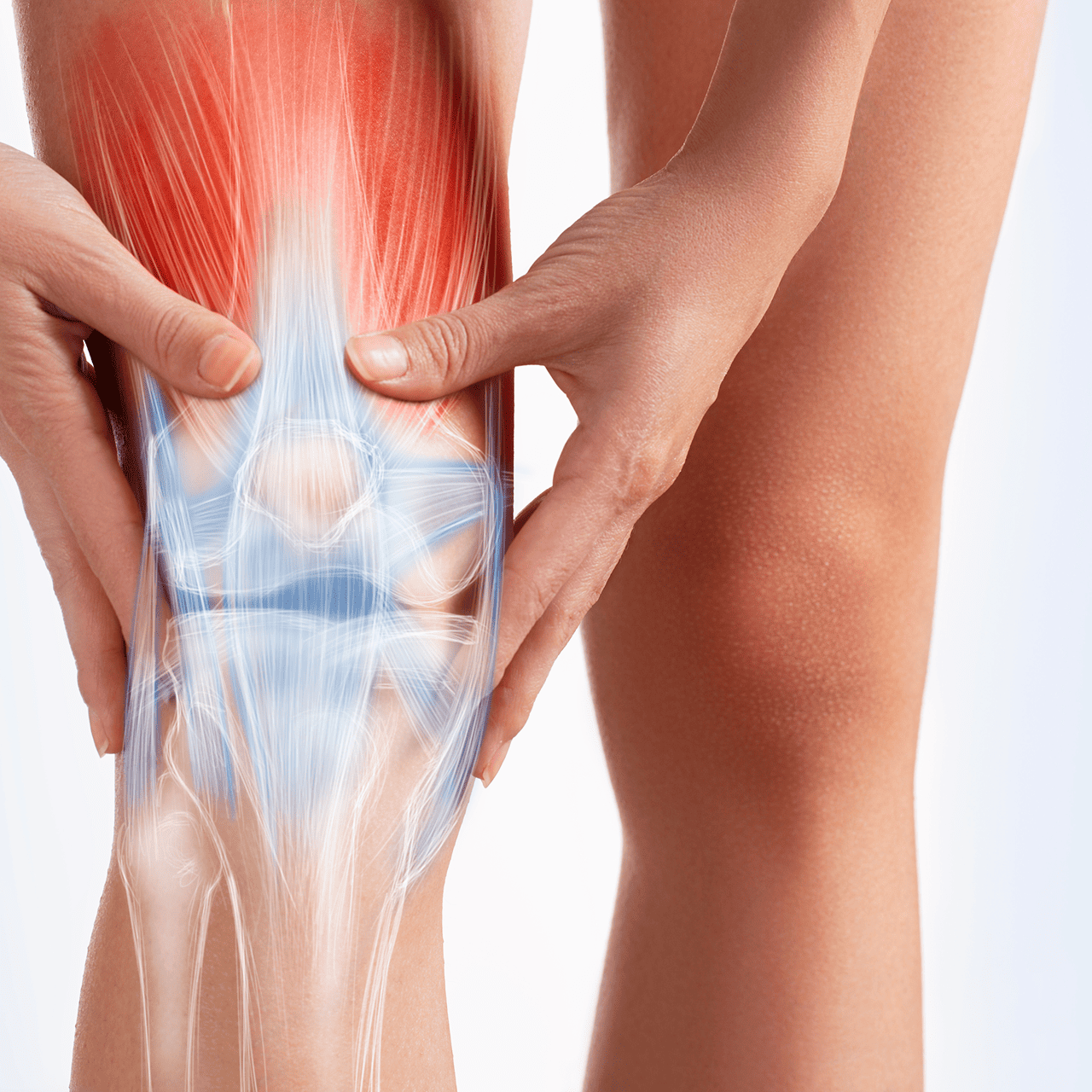
Arthritis can cause joint pain, stiffness, swelling, and difficulty with everyday activities such as walking, climbing stairs, exercising, or using your hands.
One of the most common forms of arthritis is osteoarthritis, which develops as the cartilage and other structures inside a joint break down over time.
Shockwave therapy for arthritis is a non-invasive treatment that uses acoustic pressure waves to stimulate activity in and around the painful joint. Research suggests that shockwave therapy may help reduce pain and improve function in certain patients with osteoarthritis, particularly knee osteoarthritis.
What Is Shockwave Therapy?
Extracorporeal Shockwave Therapy (ESWT) uses acoustic pressure waves that are delivered through the skin to a targeted area.
Research suggests that these acoustic pressure waves may increase blood flow, lower inflammation, pain signaling, and stimulate tissue repair.
Potential effects include:
- Reduced pain
- Improved blood flow
- Changes in pain signaling
- Stimulation of tissue repair
- Improved movement and joint function
- Effects on the tissues and bone surrounding an arthritic joint
Shockwave therapy is performed in the office and does not require surgery or an injection.
How Can Shockwave Therapy Help Arthritis?
Arthritis pain does not come only from damaged cartilage.
An arthritic joint includes many structures that can contribute to pain, including the bone underneath the cartilage, joint capsule, tendons, ligaments, and surrounding muscles.
Shockwave therapy can be directed toward painful areas around the joint in an attempt to stimulate a healing response and reduce pain.
For some patients, this can make it easier to:
- Walk
- Exercise
- Climb stairs
- Bend the joint
- Strengthen the muscles around the joint
- Perform normal daily activities with less discomfort
Shockwave therapy may also be combined with strengthening, physical therapy, weight management, and other arthritis treatments.
Knee Arthritis and Shockwave Therapy
The strongest research on shockwave therapy for osteoarthritis currently involves the knee.
Knee osteoarthritis commonly causes:
- Knee pain with walking
- Pain going up or down stairs
- Stiffness after sitting
- Difficulty standing for long periods
- Reduced range of motion
- Pain with exercise
- Swelling or tenderness around the knee
Multiple studies have found improvements in pain and function after extracorporeal shockwave therapy.
A 2024 review study involving 888 patients found that shockwave therapy was effective for the treatment of knee osteoarthritis when compared to other treatment modalities.
The American Academy of Orthopaedic Surgeons (AAOS) also states that extracorporeal shockwave therapy may be used to improve pain and function in knee osteoarthritis.
Why Choose Shockwave Therapy for Arthritis?
Non-Invasive
Shockwave therapy does not require an incision or surgery.
No Injection Required
There are no medications or needles injected into the joint during shockwave treatment.
Minimal Downtime
Most patients can return to their normal daily activities shortly after treatment.
Temporary soreness or tenderness can occur around the treated area.
Can Be Combined With Other Arthritis Treatments
Shockwave therapy does not have to replace exercise, physical therapy, weight management, or other appropriate treatments.
In many cases, improving pain can make it easier for a patient to exercise and strengthen the muscles that support an arthritic joint.
Treats More Than Just the Joint Surface
Arthritis can affect the entire area around a joint, not only the cartilage.
Shockwave allows us to target painful tissues around the joint that may also be contributing to symptoms.
What Does Shockwave Therapy for Arthritis Feel Like?
During treatment, most patients feel a rapid tapping or pulsing sensation over the targeted area.
Some areas may feel tender, especially where the joint or surrounding tissues are most painful.
The intensity can usually be adjusted according to the patient’s comfort and the condition being treated.
Treatment is performed in the office and typically does not require anesthesia.
How Many Shockwave Treatments Are Needed for Arthritis?
The exact number of treatments depends on the joint, severity of arthritis, and the patient’s response.
At our office, many patients receive approximately 6 shockwave therapy sessions over 4–6 weeks.
Some people notice improvement during the treatment series. Others continue to improve over the following several weeks.
Because shockwave therapy is intended to stimulate a biological response, improvement may be gradual rather than immediate.
Who May Be a Candidate for Shockwave Therapy?
Shockwave therapy may be worth considering for patients with:
- Knee osteoarthritis
- Chronic joint pain
- Joint stiffness
- Pain with walking or exercise
- Arthritis pain that has not improved enough with conservative treatment
- Tendon or soft-tissue pain occurring around an arthritic joint
- A desire to explore non-surgical treatment options
Shockwave may be less useful in very advanced or end-stage arthritis, particularly when there is severe joint destruction or major mechanical limitation. One 2024 systematic review found poorer results in patients with severe knee osteoarthritis.
This is why the severity of the arthritis and the actual source of the patient’s pain should be evaluated before treatment.
Is Shockwave Therapy Used for All Types of Arthritis?
Most of the research discussed here involves osteoarthritis, sometimes called degenerative arthritis.
Inflammatory conditions such as rheumatoid arthritis, psoriatic arthritis, or an acutely swollen and inflamed joint are different diseases and require a different medical approach.
The first step is determining what type of arthritis you have and what is actually causing the pain.
Shockwave Therapy for Arthritis in Rhode Island
At the Pain Center of Rhode Island in Cranston, RI, we specialize in non-surgical treatment of musculoskeletal and joint pain.
We offer both focused shockwave therapy and radial shockwave therapy for appropriate joint and musculoskeletal conditions.
Our approach begins with identifying the source of your pain and evaluating the severity of your arthritis. When appropriate, diagnostic ultrasound can also help us evaluate the joint and surrounding tendons, ligaments, and soft tissues.
We can then determine whether shockwave therapy should be part of your treatment plan.
If you are looking for shockwave therapy for arthritis in Rhode Island, or are experiencing knee arthritis, osteoarthritis, chronic joint pain, or stiffness, contact the Pain Center of Rhode Island to schedule an evaluation.
Pain Center of Rhode Island
1150 Reservoir Avenue, Suite 200
Cranston, RI 02920
401-648-6100